SMB M&A in 2026: Cautious Buyers, Disciplined Sellers
A quarterly view from Archveo Advisors on what's actually moving in the lower-middle-market — deal flow, valuations, and the businesses commanding attention.
This issue reflects Q1 2026 deal flow across the lower-middle-market, drawing on data from DealStats, IBBA & M&A Source, BizBuySell and Axial.
Editor's Note
The market is steady but buyers are being selective. We're not seeing massive jumps in pricing right now, but strong businesses continue to command attention. Businesses with clean financials, strong cash flow, and stable operations are still getting multiple offers and strong valuations. Businesses with weaker numbers or inconsistent performance are taking longer to sell and facing more scrutiny.
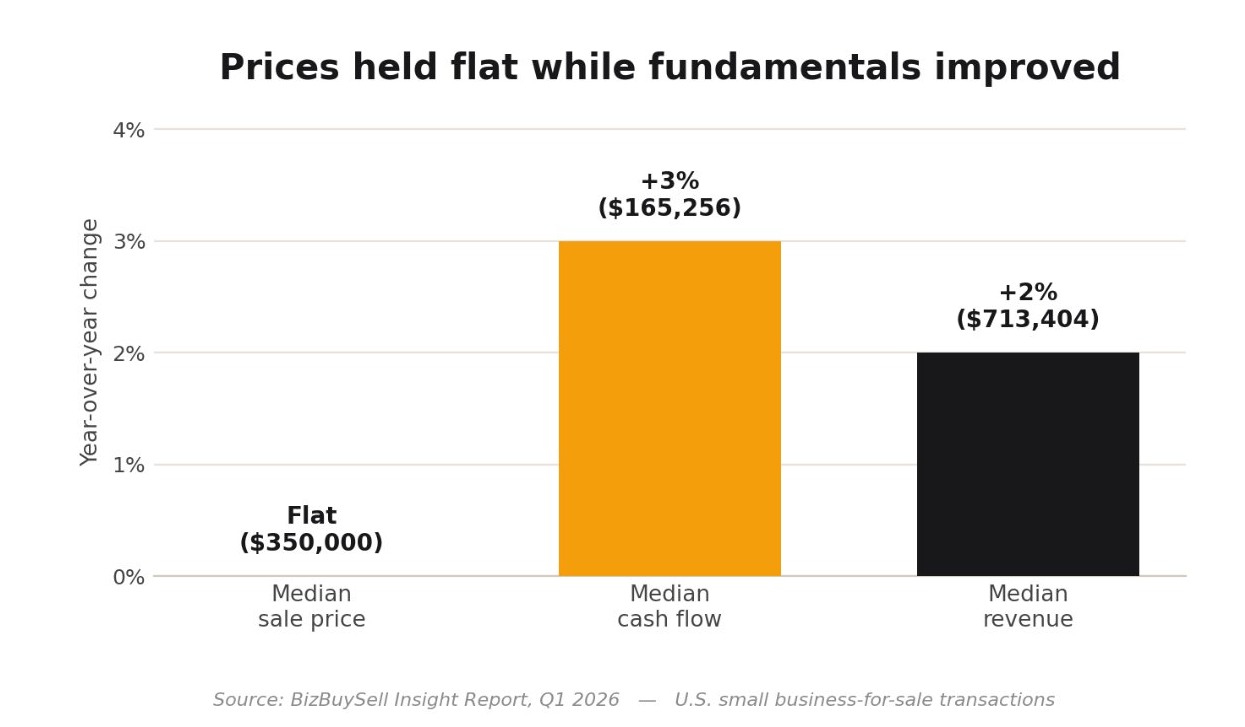
One thing that stood out this quarter: prices stayed relatively flat while business fundamentals actually improved. Median cash flow rose 3% and revenue rose 2%, even though median sale prices barely moved. That tells me buyers are still willing to pay — but only for quality businesses.
— Eric Mendelsohn, Founder, Archveo Advisors
By the Numbers
Even in the broader small-business market, where most public data lives, the pattern is the same: prices flat, fundamentals improving.
What We're Seeing
Seller readiness: Sellers increasingly need flexible deal structures. SBA lending standards have tightened, and many buyers now expect some level of seller financing to bridge the gap. The sellers getting deals done are the ones willing to be flexible on structure. Cost pressures haven't fully eased either — fuel, energy, and lingering inflation continue to weigh on margins, which is putting a premium on businesses that can adjust pricing when their own costs rise.
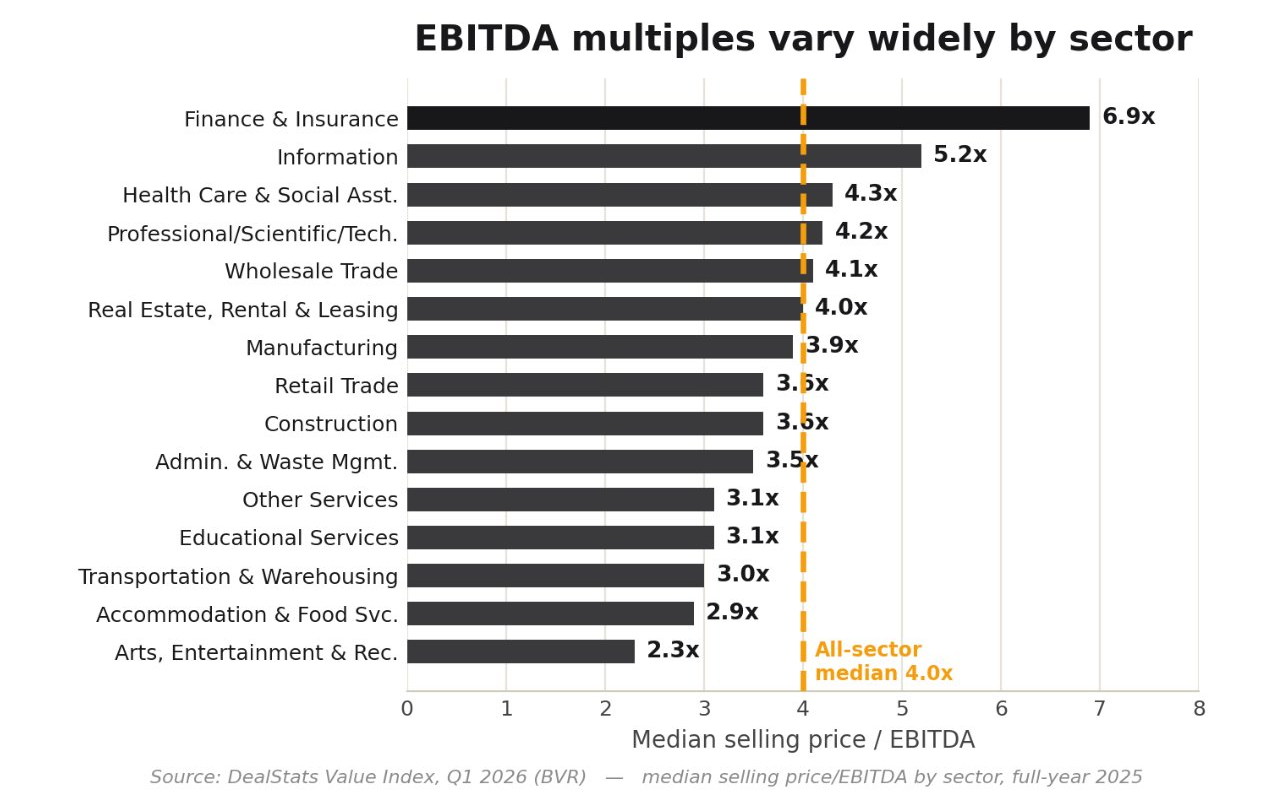
Sector dynamics: Valuation multiples vary heavily by industry. Finance and insurance businesses trade at significantly higher EBITDA multiples than restaurants, hospitality, or entertainment. There's no universal multiple anymore — margins, recurring revenue, and risk profile all matter. AI is part of nearly every conversation now, but it isn't moving valuations yet. What buyers are starting to ask is the opposite question: how exposed is this business if AI changes the industry?
Who's Buying
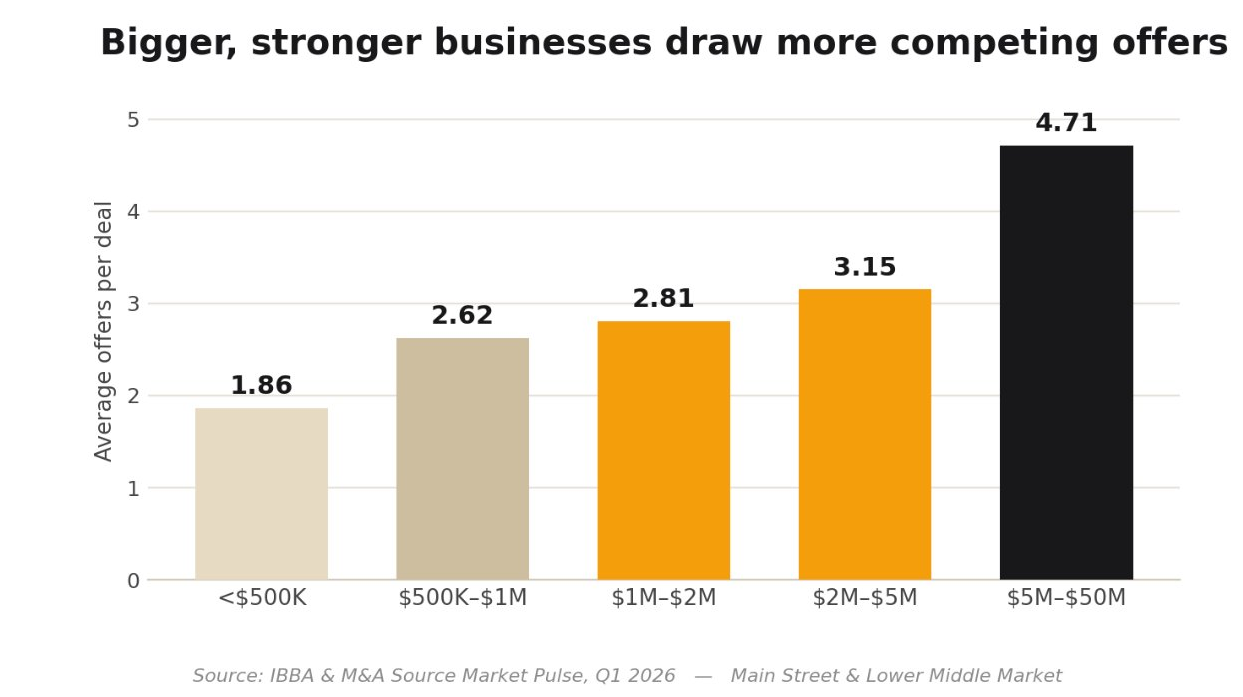
Buyer behavior: The buyer pool is shifting toward people leaving corporate careers — professionals who want to own and run a business instead of working for someone else. That group keeps growing, partly driven by uncertainty around AI and job security. Private equity stays active in recurring-revenue service businesses but is underwriting carefully and not overpaying. Competition concentrates at the top: deals between $5M and $50M averaged nearly five offers per transaction in the first quarter, while deals under $500K averaged fewer than two.
Takeaways
For Sellers: Preparation matters more than ever. Businesses with organized books and records, clean financials, solid systems, and a clear growth story are still selling well. Unprepared businesses are the ones struggling. The biggest thing I'm telling clients right now is simple: get ready before you go to market.
For Buyers: Line up financing before you commit. Competition is fiercest for larger, stronger businesses — know what you can afford, and move decisively when a quality business comes up. This is still a healthy market. It's just a disciplined one.